

Hornet Nest in the Ground Removal: Top 5 Safe Methods 2024
Why Removing a Hornet Nest from the Ground is Crucial
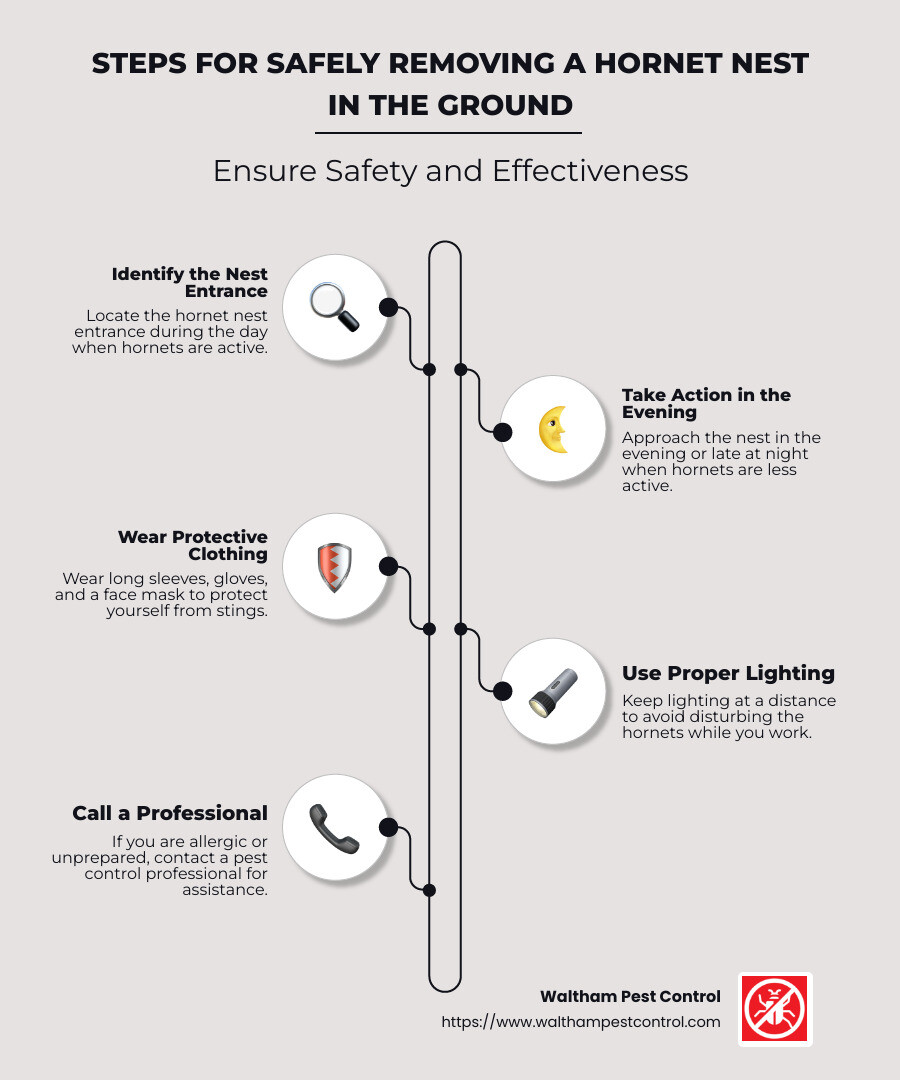
Hornet nest in the ground removal is not just about getting rid of annoying pests; it’s also about ensuring the safety of your family and pets. Ground hornets can be incredibly aggressive if disturbed, especially if you unknowingly walk near their nest. If you need a quick answer for hornet nest in the ground removal:
- Identify the nest entrance during the day.
- Take action in the evening when hornets are less active.
- Wear protective clothing.
- Approach with care and keep lighting at a distance.
- Consider calling a professional if allergic or unprepared.
When dealing with hornet nests in the ground, safety should be your top priority. Ground hornets have painful stings that can be dangerous, especially for those allergic to stings. Even if you’re not allergic, approaching a hornet nest without the proper precautions can result in multiple stings and subsequent health risks.
My name is Waltham Pest Control, and with over 40 years of experience in pest control, I’ve handled countless cases of hornet nest in the ground removal. My team and I at Waltham Pest Control are equipped to safely and effectively remove these nests, ensuring your home and yard are safe once more.
Similar topics to hornet nest in the ground removal:
– best time to remove hornets nest
– can you remove a hornets nest in the winter
– how to remove a bald faced hornet nest
Identifying Ground Hornets and Their Nests
Ground hornets, also known as cicada killer wasps, are large and intimidating insects. Identifying them and their nests is the first step in safely removing them from your property.
Appearance
Ground hornets are among the largest wasps in the United States, reaching up to two inches in length. They have black bodies with yellow markings, which can make them look similar to yellow jackets. Despite their scary appearance, they are generally less aggressive than other stinging insects.
Behavior
Ground hornets are solitary wasps, meaning they don’t form large colonies like honey bees or yellow jackets. Female ground hornets dig tunnels in the ground to lay their eggs, while males are often seen hovering around the nesting sites, being territorial but unable to sting.
Nesting Habits
Ground hornets prefer open areas with sandy soil, which makes it easier for them to dig their nests. These nests are typically about 10 inches deep with a 6-inch horizontal tunnel. You might find their nests in flower beds, backyards, or even along sidewalks.
Signs of a Ground Hornet Nest:
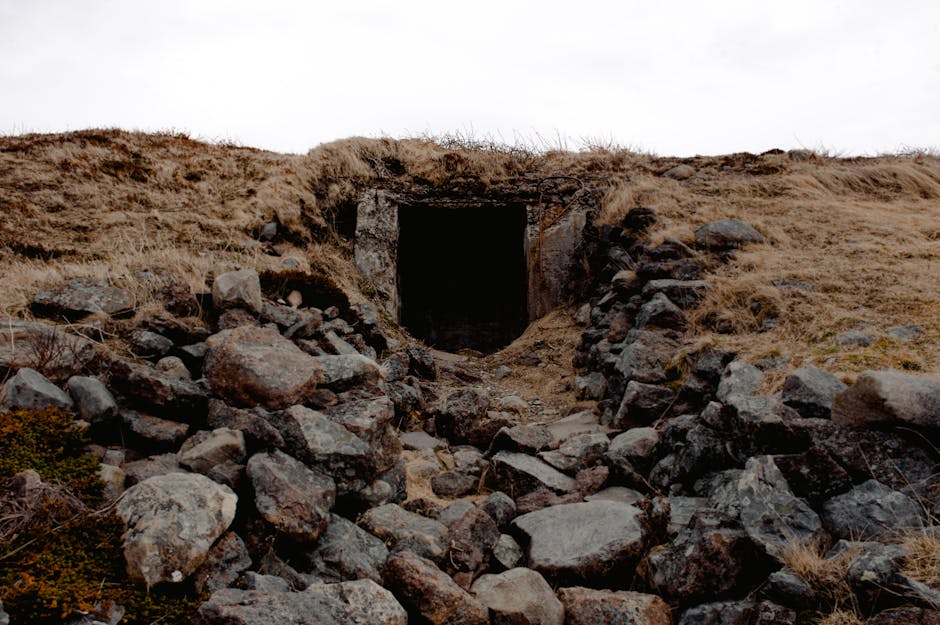
- Holes in the Ground: Look for holes about an inch and a half wide. These are the entrances to their nests.
- Piles of Dirt: These are often shaped like a horseshoe and indicate where the hornets have been digging.
- Increased Activity: If you see large wasps flying low to the ground in a specific area, it’s likely you have a ground hornet nest nearby.
Signs of Infestation
Early signs might be subtle, but as the season progresses, you may notice more obvious indicators:
- Multiple Holes: Unlike in their first year, when you might see only a few, an established infestation can result in multiple holes close to each other.
- Aggressive Behavior: While less aggressive than some other wasps, ground hornets will defend their nests if they feel threatened.
- Dead Cicadas: If you find paralyzed cicadas near the holes, it’s a clear sign of ground hornet activity.
Real-Life Example
One of our clients, Mrs. Thompson, noticed her garden had several small holes and piles of dirt. She thought it was due to some small animal. However, after seeing large wasps flying around, she contacted us. Upon inspection, we confirmed a ground hornet infestation. We safely removed the nests, and her garden was hornet-free within a day.
Identifying ground hornets and their nests early can save you from potential stings and yard damage. If you notice any of these signs, it’s crucial to take action quickly.
Next, we will discuss DIY Methods for Hornet Nest in the Ground Removal, where we’ll cover protective clothing, timing, and both synthetic and natural remedies.
DIY Methods for Hornet Nest in the Ground Removal
Using Synthetic Pesticides
Removing a hornet nest in the ground can be dangerous, so take proper precautions. If you decide to tackle this yourself, synthetic pesticides are one of the most effective methods.
Protective Clothing and Timing
- Protective Clothing: Always wear boots, coveralls, heavy gloves, and veiled headgear. Tape down your collar and cuffs to prevent hornets from getting inside your clothes.
- Timing: The best time to apply pesticides is at night when hornets are less active and most are inside the nest.
Sprays and Dust
- Insecticide Sprays: Use a spray designed for stinging insects. These sprays can reach from a distance, minimizing your risk of getting stung. Make sure to follow the instructions on the can.
- Dust Insecticides: Dusts like Sevin (carbaryl) can be effective. Apply the dust directly into the nest entrance. The hornets will carry it deeper into the nest, killing more insects.
Application Tips
- Approach the nest calmly and quietly.
- Stand at a safe distance and aim the spray or dust at the nest entrance.
- Be ready to retreat quickly if hornets swarm out.
- Check the nest the next day to ensure all hornets are dead. Repeat the treatment if necessary.
Natural Remedies
If you prefer a chemical-free approach, there are several natural remedies to consider.
Soap and Water
- Materials Needed: Dish soap, water, and a spray bottle.
- Setup: Mix a few tablespoons of dish soap with water in a spray bottle.
- Effectiveness: Spray the soapy water directly into the nest entrance. The soap will suffocate the hornets. This method is best for smaller nests.
Diatomaceous Earth
- Materials Needed: Food-grade diatomaceous earth.
- Setup: Sprinkle diatomaceous earth around and into the nest entrance.
- Effectiveness: The fine particles will stick to the hornets, dehydrating and killing them over time. This method is slower but effective.
Vinegar
- Materials Needed: White vinegar and water.
- Setup: Mix equal parts vinegar and water in a spray bottle.
- Effectiveness: Spray the mixture into the nest entrance. The acidity of the vinegar will help kill the hornets.
DIY Traps
Traps can also be an effective way to reduce the number of hornets.
Materials Needed
- Plastic bottle (like a 2-liter soda bottle)
- Sugar
- Vinegar
- Dish soap
- Meat (optional, like fish or liver)
Setup
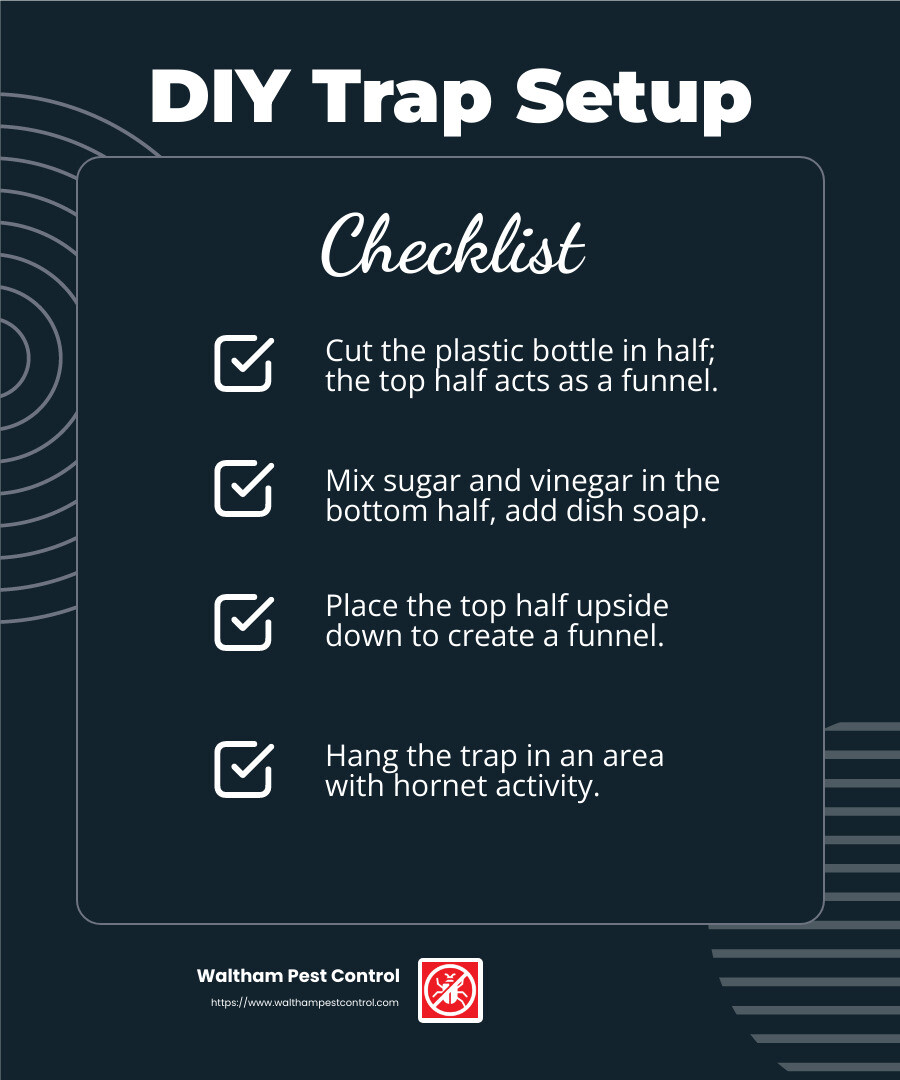
- Prepare the Bottle: Cut the plastic bottle in half. The top half will act as a funnel.
- Create the Bait: Mix sugar and vinegar in the bottom half of the bottle. Add a few drops of dish soap to break the surface tension. If using meat, hang it just above the liquid line inside the trap.
- Assemble the Trap: Place the top half of the bottle upside down into the bottom half, creating a funnel.
- Place the Trap: Hang the trap in an area with hornet activity, away from high human traffic.
Effectiveness
This trap lures hornets with the bait and traps them inside the bottle. Regularly check and empty the trap to maintain its effectiveness. While traps won’t eliminate hornets entirely, they can significantly reduce their numbers.
Using these DIY methods, you can effectively manage a hornet nest in the ground. Whether you choose synthetic pesticides or natural remedies, always prioritize your safety. Next, we will discuss Professional Hornet Nest Removal Services and when to call in the experts.
Professional Hornet Nest Removal Services
Removing a hornet nest from the ground can be risky and challenging. Here’s when and why you should consider calling a professional:
When to Call a Professional
- Allergies: If you’re allergic to wasp or bee stings, don’t attempt to remove the nest yourself. The risk of a severe allergic reaction is too high.
- Size of the Nest: Large nests can house thousands of hornets. The bigger the nest, the more aggressive the hornets will be.
- Location: If the nest is in a difficult-to-reach area, like under a deck or in dense shrubbery, professionals have the tools and experience to handle these situations safely.
- Repeated Infestations: If you’ve treated the nest and hornets keep coming back, a professional can identify and eliminate the root cause.
Benefits of Professional Services
- Safety: Professionals have the necessary protective gear and experience to handle hornet nests without getting stung.
- Effectiveness: Licensed pest control experts use potent insecticides and methods that are more effective than DIY solutions.
- Peace of Mind: With a professional service, you can be confident that the nest is completely removed and won’t pose a threat to you or your family.
Safety Considerations
Professional pest control companies prioritize safety. They follow strict protocols to ensure that hornet removal is done effectively without endangering anyone nearby. For example:
- Protective Gear: Technicians wear full-body suits, gloves, and veiled headgear to prevent stings.
- Specialized Equipment: They use long-reach sprays and dusters to treat the nest from a safe distance.
- Proper Disposal: Professionals ensure that the nest and dead hornets are disposed of in a way that prevents re-infestation.
Waltham Pest Control
At Waltham Pest Control, we understand the dangers and complexities of removing a hornet nest in the ground. Our technicians are licensed, qualified, bonded, and insured. They treat every home with the same dedication and care as their own.
- Experience: With years of experience, our team can handle any type of hornet infestation, no matter how severe.
- Customized Solutions: We assess your specific situation and provide a custom treatment plan to ensure the hornets are gone for good.
- Follow-Up: We offer follow-up visits to ensure the nest is completely eradicated and to prevent future infestations.
If you’re dealing with a troublesome hornet nest, don’t hesitate to reach out to us. Our professional services are designed to keep you safe and your home hornet-free.
Next, we will cover Preventing Future Infestations and how to keep your yard hornet-free.
Preventing Future Infestations
Once you’ve successfully removed a hornet nest, the next step is to prevent them from coming back. Here are some effective methods to keep your yard hornet-free:
Yard Maintenance
Keeping your yard clean and well-maintained is crucial. Hornets are attracted to clutter and overgrown vegetation where they can easily build nests. Here are some tips:
- Regular Mowing: Keep your grass trimmed and your yard free of tall weeds.
- Remove Debris: Clear away piles of leaves, wood, and other debris where hornets might nest.
- Prune Shrubs and Trees: Trim back overgrown trees and shrubs to eliminate potential nesting sites.
Moisture Control
Hornets prefer dry conditions for nesting. By keeping your yard moist, you can make it less inviting for them:
- Watering: Regularly water your lawn, especially during late spring and early summer when hornets are most likely to nest.
- Irrigation Systems: Consider installing a sprinkler system to keep the soil consistently moist.
Traps
Using traps can help catch hornets before they establish a nest:
- Commercial Traps: Purchase hornet traps from your local hardware store. These traps usually contain attractants that lure hornets inside, where they get trapped and die.
- DIY Traps: You can also make your own traps using a plastic bottle filled with a sweet liquid like sugar water or soda. Cut off the top of the bottle, invert it, and place it back inside to create a funnel.
Repellents
Certain smells and substances can deter hornets from nesting in your yard:
- Essential Oils: Hornets dislike the smell of peppermint, eucalyptus, and citronella. Mix a few drops of these oils with water in a spray bottle and spray around potential nesting sites.
- Vinegar: Spraying white vinegar around your yard can also repel hornets. Just be sure to spray in the evening when hornets are less active.
Sealing Entry Points
Hornets can enter your home through small cracks and gaps. Seal these entry points to keep them out:
- Caulking: Use caulk to seal cracks and crevices in your home’s exterior, especially around windows and doors.
- Screens: Install or repair screens on windows and vents to prevent hornets from getting inside.
By following these tips, you can significantly reduce the chances of hornets nesting in your yard again.
Next, we will answer some frequently asked questions about hornet nest in the ground removal to help you stay informed and prepared.
Frequently Asked Questions about Hornet Nest in the Ground Removal
How to get rid of hornets nest in the ground?
Removing a hornet nest in the ground can be tricky and dangerous. Here are some methods to consider:
Synthetic Pesticides: These are effective but should be used with caution. Products like Ortho® Bugclear™ are designed to kill hornets on contact. Follow the instructions carefully and apply the pesticide directly into the nest entrance.
Insecticide Sprays: Use sprays that project a long stream to keep a safe distance. Spray the nest entrance thoroughly and repeat as needed until no more hornet activity is observed.
Insecticide Dust: This can be puffed into the nest entrance. The dust clings to the hornets as they enter and exit, eventually killing the entire colony.
Safety Tip: Always apply pesticides in the evening or at night when hornets are less active. Wear protective clothing to minimize the risk of stings.
Can I remove a hornets nest myself?
Yes, you can, but it requires caution and proper gear. Here are some steps:
Protective Clothing: Wear long sleeves, pants, gloves, and a hat. Tape down cuffs and collars to prevent hornets from getting inside your clothing.
Timing: The best time to remove a nest is in the evening or at night when hornets are inside and less active.
DIY Methods:
- Soapy Water: Mix dish soap with water and pour it into the nest entrance. The soap will suffocate the hornets.
- Vacuum Cleaner: Use a vacuum with a long hose to suck up the hornets. Be sure to seal the vacuum bag immediately after.
- Natural Remedies: Sprinkle diatomaceous earth around the nest entrance. This will dehydrate and kill the hornets.
Warning: If you’re allergic to stings or the nest is large, it’s best to call a professional. Hornet stings can be dangerous and even life-threatening.
What is the best ground hornet killer?
The best ground hornet killers include:
Ortho® Bugclear™: This insecticide is highly effective and easy to use. It kills on contact and can be applied directly into the nest.
Insecticide Sprays: Products like Raid® Wasp & Hornet Killer are designed for long-range application, keeping you at a safe distance while effectively killing hornets.
Insecticide Dust: Sevin® Dust is a popular choice. It can be puffed into the nest entrance and clings to hornets as they move in and out, eventually killing the entire colony.
Effectiveness: Synthetic pesticides and insecticides are generally the most effective methods for quickly eliminating hornet nests. However, always follow the instructions and take necessary safety precautions.
By understanding these methods and taking appropriate safety measures, you can effectively handle a hornet nest in the ground removal. If in doubt, it’s always safer to call in the professionals.
Conclusion
Removing a hornet nest in the ground is a task that requires careful planning and safety measures. Let’s summarize what we’ve covered and emphasize the importance of professional help.
Summary
We’ve discussed various methods for dealing with ground hornet nests, including synthetic pesticides, insecticide sprays, and natural remedies like soapy water and diatomaceous earth. We’ve also highlighted the importance of wearing protective clothing and choosing the right time—usually evening or night—to tackle the nest when hornets are less active.
Safety
Safety cannot be overstated. Hornet stings can be extremely painful and, in some cases, life-threatening, especially if you’re allergic. Always wear protective clothing, tape down cuffs and collars, and keep a safe distance when applying any treatments. If the nest is large or you feel unsure, don’t hesitate to call a professional.
Professional Help
When it comes to hornet nest in the ground removal, sometimes the best course of action is to seek professional assistance. Waltham Pest Control has over 40 years of experience in dealing with such issues. Our technicians are licensed, insured, and highly trained to handle hornet infestations safely and effectively.
We use specialized equipment and proven techniques to ensure the complete removal of hornet nests, minimizing the risk to you and your family. Plus, we offer cost-effective solutions custom to your specific situation.
Waltham Pest Control
Based in Burlington, MA, Waltham Pest Control serves Eastern Massachusetts with top-notch pest control services. Whether it’s a hornet nest in your yard or any other pest issue, we are committed to providing quality and reliable solutions.
For more information or to schedule a service, visit our Hornets Nest Removal page and request your free quote today.
By following these guidelines and considering professional help, you can safely and effectively manage a hornet nest in the ground. Stay safe and let the experts handle the rest!
